Skip to content
LEGENDS
OF ROMANIA
RO
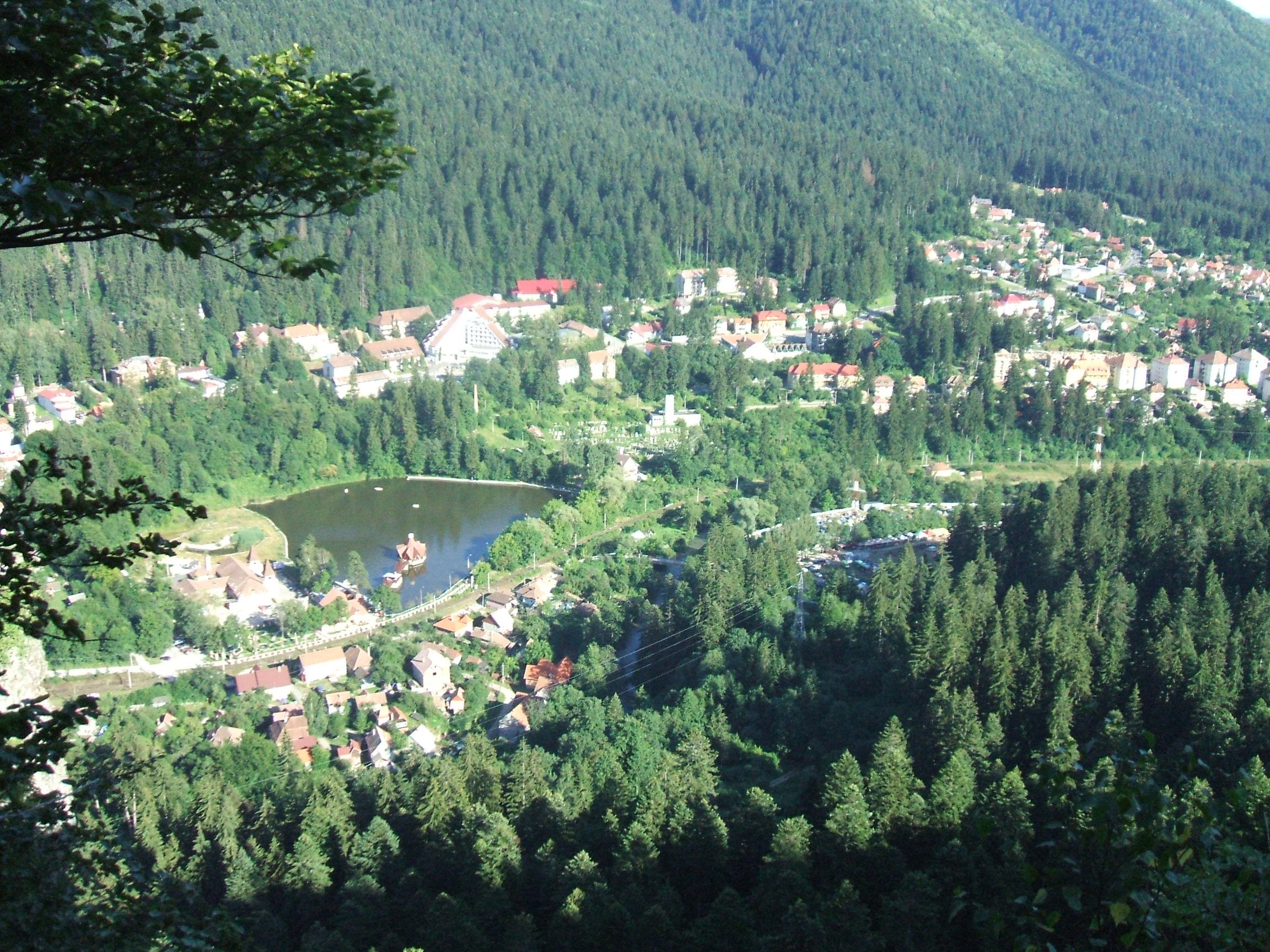
Băile Tușnad and Lake Ciucaș seen from Falcon Stone.

Wilds

Falcon Stone · Băile Tușnad / Olt Valley

Falcon Stone

An andesitic cliff above Băile Tușnad, where the Olt Valley opens wide and silence seems to have its own rules.

Photo: Aakmaros · CC BY-SA 3.0 · cropped and optimised for the web

Quick facts and editorial frame

The place at a glance

Real place
Falcon Stone / Falcon Rock[4][15]
Type
Nature reserve, andesitic cliff, and viewpoint[1][4][10]
Region
Băile Tușnad / the Olt’s Tușnad Gorge[10][4]
Altitude
Route summit/cross: 858 m in the operator’s route sheet; andesite tower: 824 m on Visit Harghita

The sources do not explain whether the difference reflects different reference points, measurement methods, or a revision of the data.

[4][6]
Visit duration
The operator estimates a 1 hr 45 min–1 hr 50 min round trip, including its published stops

The calculation combines 45 minutes’ walking, 15 minutes at the panels, 15–20 minutes at the cross, and approximately 30 minutes for the return; pace and conditions can change the duration.

[5]
Access
On foot from Lake Ciucaș, following the red-triangle marking

The thematic trail has information panels. Before setting out, check the path condition, weather, and any restrictions.

[4][5][9]
Season
Spring–autumn; winter only after checking conditions
Suitable for
Nature, photography, viewpoint, quiet travel

Featured legend

The Stone That Does Not Answer

A legend about a father who called his son from the heights, a name carried in the wrong direction, and the falcon that stopped his final step.

Before people climbed Falcon Stone for the view, they climbed it to watch the valley.

From there, they could see the smoke of villages, flocks returning late, and clouds descending over the roads. When someone was delayed beyond the mountains, a relative would remain on the rock until the light went out.

One autumn, a young man was expected home after several months away at work. He knew the forest, but the rain had shifted the earth, and leaves had covered the lesser paths. Towards evening, he chose a trail he remembered from childhood.

The trail took him between the firs and then divided in two.

He went left.

An hour later, he reached the same place again.

In the village, his father waited until nightfall. When his son did not arrive, he climbed Falcon Stone. He watched the valley, but the clouds lay low and no light could be seen on the road.

The following evening, he climbed again.

On the third evening, he found a falcon on the edge of the rock. The bird stood motionless, its head turned towards the forest rather than the valley.

The man waited. The wind grew stronger. Branches began to strike one another, and darkness covered the paths.

Then he called his son by name.

Once.

He listened, but the stone did not return so much as an echo.

He called a second time.

The falcon opened its wings but did not fly.

The third time, the man called as loudly as he could. The name passed over the edge of the rock and vanished into the valley.

In the forest, the young man heard it.

His father’s voice came from above and to his right. He set off towards it, relieved that the village was near.

After a few dozen steps, his name sounded again. This time it came from ahead and lower down. The young man descended between the trees, although he did not recognise the place.

The third call came from behind him.

He turned.

There was no path any more. Beneath his feet lay only wet leaves, and between the trunks a strip of sky had opened. The echo of the final call passed through the trees again, closer than before.

The young man took a step.

A falcon dropped onto the branch in front of him.

It came so quickly that the air struck by its wings extinguished the voice in his throat. The bird did not move aside. It watched him for a moment, then drove its talons into the bark and remained between him and the call.

The young man tried to pass it.

The falcon spread its wings.

Then, through the leaves, the young man saw the drop. One more step would have carried him beyond the concealed edge of a broken cliff.

He stood motionless until the voice spoke his name again.

This time, he listened without moving. The call resembled his father’s voice, but it came from where the precipice should have been.

The falcon lifted from the branch. It did not fly towards the voice. It circled above the trees and set off towards the faint lights of the valley.

The young man went in that direction.

He reached home at dawn, his clothes wet and his hands scratched. His father was waiting at the gate.

“You called me,” the son said.

“From the stone,” his father replied.

“How many times?”

“Three.”

The young man looked towards the mountain.

“I heard four.”

Neither of them said anything more.

The father never again climbed Falcon Stone to call for someone. The son lived for many years, but whenever he heard his name called from a distance, he did not answer at once. He stopped and first made certain which direction the voice had come from.

Since then, people have said that a name must never be called from the rock.

Not because Falcon Stone answers.

But because a name cast from there does not always reach the person you are seeking.
Documented folklore

Reported local legends

These stories are traditions or accounts associated with the place, not confirmed historical facts and not the original fiction published by Legends of Romania.

01 · Reported

The Porte’s falcons and the unseen castle

In Orbán Balázs’s nineteenth-century description, the cliff opposite Băile Tușnad appears as Felső-Sólyomkő. He says falcons were supposedly reared or collected here for tribute to the Ottoman Porte and links the rock’s name to that practice. He also records a local belief that a castle once stood on the cliff, while noting that he found no visible remains.

It must not be confused with the documented medieval fortification at Piatra Șoimilor near Bixad or with similarly named places in other counties.

An account published in the nineteenth century, not independent proof that falcons were reared here or that a fortress stood on the upper rock.

[15][16]

The real place

What is true here

The cliff is at once a volcanic outcrop, a one-hectare reserve, a habitat for rare plants, and the end of a thematic trail for which the sources publish differing reference points and measurements.

01

Science

Source-based estimate

A window into the Pilișca volcano

Falcon Stone exposes tower-like andesite on the eastern flank of the Pilișca volcanic edifice. Geological research describes Pilișca as an andesitic composite volcano topped by dacitic dome complexes. The regional relationship is secure, but the checked sources do not provide a separately published date for the viewpoint outcrop itself.

[4][11][10]

02

History

Well documented

One hectare in law

The national list records Piatra Șoimilor Nature Reserve at entry 2.484 with an area of 1.00 ha. Its dedicated management plan and regulations were approved by Order no. 2,204/2016 and published in 2017. Some older tourism pages give 1.5 ha, but that figure should not replace the statutory area.

[1][2][3][6]

03

Nature

Well documented

Rock and mixed woodland

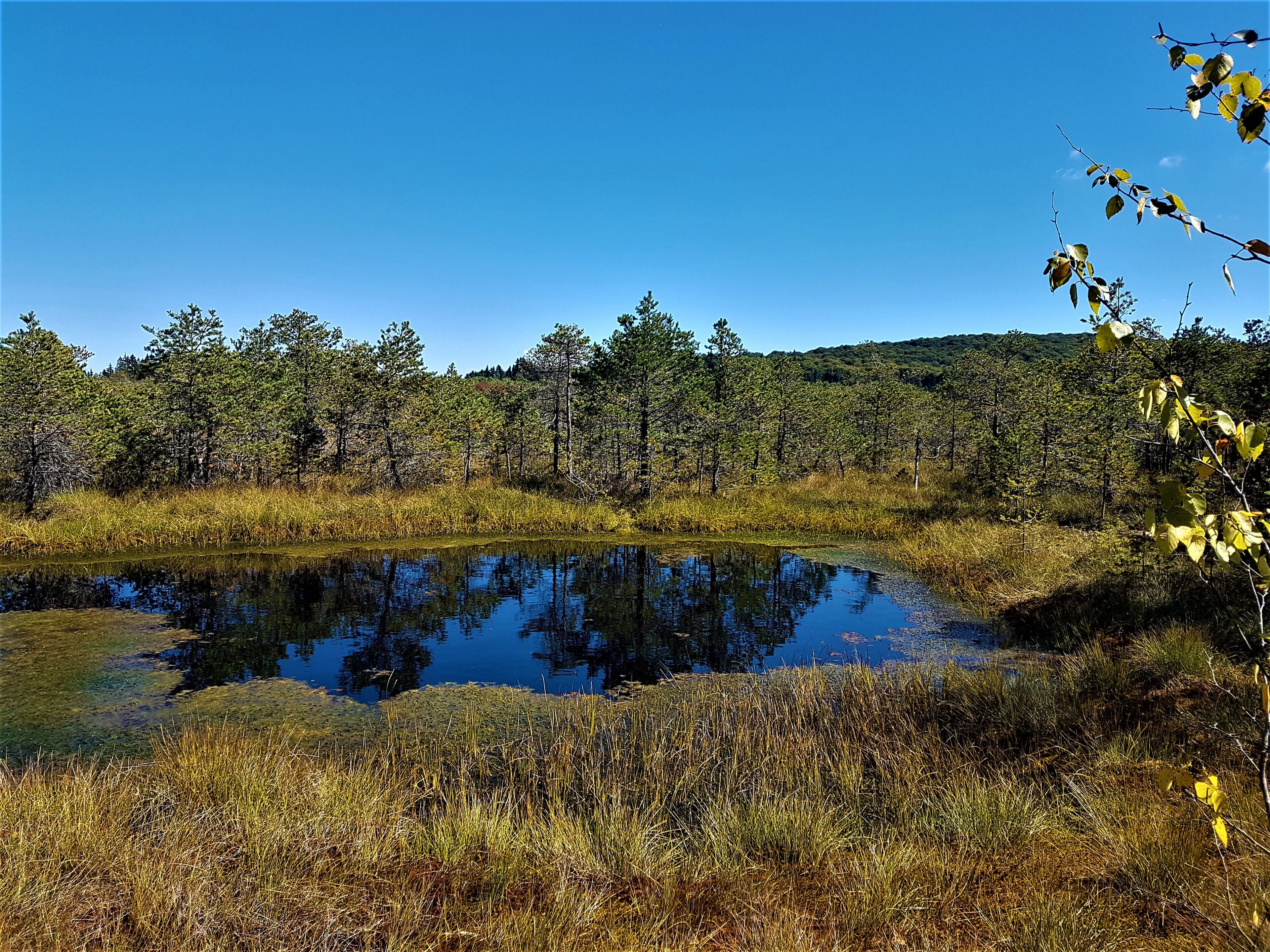
The andesite outcrops stand within a landscape of mixed deciduous and coniferous woodland. The cited sources document the combination of rock and woodland but do not quantify the proportion of each habitat within the reserve.

[10][4]

04

Unexpected fact

Well documented

Rare and Romanian — but not ‘found only here’

Teleki’s hawkweed, published in 1942 as Hieracium telekianum and now also treated as Hieracium sparsum subsp. telekianum, is a Romanian endemic found at Falcon Stone. Later research reported additional Eastern Carpathian localities, including in the Vrancea Mountains, so ‘the only place in the world’ is outdated.

[10][12][13]

05

Nature

Source-based estimate

Bears are documented; the falcon claim needs care

A university study included field observations in the reserve while examining human–bear relations around Băile Tușnad. The county tourism platform also lists the common kestrel, Falco tinnunculus, among local birds of prey. This does not prove that falcons currently breed on the cliff or that the bird certainly gave the place its name.

[14][6]

06

Science

Well documented

A viewpoint over the Olt corridor

The cliff rises on the right bank, west of Băile Tușnad, above the narrow Olt valley corridor. Documented views from the cross include the resort and Lake Ciucaș, the gorge, and the Ciomad massif. Visibility depends on weather and vegetation.

[10][4][8][15]

07

Unexpected fact

Well documented

The trail is also an outdoor exhibition

The thematic trail was created in 2010 over the red-triangle route. Its 2011 documentation described a 2.5 km trail with 189 m of elevation difference and a duration of about two hours, starting in town; the current description measures the Lake Ciucaș–cross section separately at 1.4 km. The two datasets should not be combined as though they used the same endpoints.

[7][4][5]

08

Culture

Well documented

There are two ‘Falcon Stones’ in the same gorge

In the nineteenth century, Orbán Balázs called the cliff opposite the spa Felső-Sólyomkő, ‘Upper Falcon Stone’. Farther south near Bixad, another hill named Piatra Șoimilor (‘Falcon Stone’) bears the remains of a medieval fortification now entered in Romania’s List of Historic Monuments. The ruins, castle stories, and routes near Bixad must not be transferred to the Băile Tușnad viewpoint.

[15][16]

At a glance

Reference facts

Place identity

Status
Protected area of national interest, a geological and botanical nature reserve[1][10]
Category
IUCN category IV[3][10]
Setting
Immediately beside Băile Tușnad, on the eastern slope of Mount Pilișca[4][10]

Geology and landform

Rock
Andesite, volcanic rock[4][10][11]
Form
Andesitic outcrops shaped as towers/cliffs[4][10]
Height above area
Local sources describe the towers as rising approx. 50–60 m above the area, without specifying the lower datum[4]
Altitude
Route summit/cross: 858 m in the operator’s route sheet; andesite tower: 824 m on Visit Harghita[4][6]

The reserve

Area
1 HaThe statutory area at entry 2.484; some older tourism pages publish 1.5 ha.[1][4][6]
Character
Reserve of geological and botanical interest within a landscape of rock and mixed woodland[10][4]
Thematic trail
The trail created in 2010 includes panels about the reserve, geology, woodland, flora, and fauna[7][4]

View

Valley
Views over Băile Tușnad, Lake Ciucaș, and the Olt gorge[4][8][15]
Visible landmarks
Sources mention the resort, Lake Ciucaș, the Olt gorge, the Ciomad massif, and surrounding ridges; visibility depends on conditions[4][10][8]

Visiting notes

Trail
Follow the marked route; do not shortcut through sensitive reserve areas[4][9]
Weather
Avoid the climb in unstable weather, heavy rain, ice, or poor visibility[9]

Visiting guide

Practical notes

Accessibility
Walking accessThe destination operator describes the Lake Ciucaș–cross section as follows: start at 636 m, endpoint at 858 m, 1.4 km, an endpoint difference of 222 m, and a published average gradient of 15.3%. Follow the red-triangle marking and do not combine these figures with measurements for the older trail starting in town.
Time & Season
The operator estimates approx. 1 hr 45 min–1 hr 50 min round trip, including its published stops · Spring–autumnIdeal time: In daylight, with enough time to return before dark
01

Getting there

The trail starts at Lake Ciucaș in Băile Tușnad. After crossing the bridge over the Olt River beside the lake, take the right-hand branch by the information panels and follow the red-triangle marking. The path crosses the forest road, passes Raven Brook, and climbs through the reserve gate towards Falcon Stone.

02

When to go

Spring, summer, and autumn are the conservative editorial recommendation, not an official calendar. Set out in daylight, allow enough time to return before dark, and avoid unstable weather or poor visibility.

03

Is it suitable for children?

There is no separate official recommendation for children. The route includes steep ascent, uneven ground, and exposed edges, so the accompanying adult must assess each child’s experience and fitness. Close supervision is essential; the route is not pushchair-accessible.

04

Keep in mind

This is a nature reserve, not only a viewpoint. Stay on indicated trails, do not damage vegetation, and do not treat the cliff as a backdrop for risky photos.

Before you go

Safety is part of the journey.

The route is short but involves sustained ascent, very steep sections, uneven ground, and exposed edges. Assess your fitness realistically and turn back if the terrain, weather, or your condition makes it unsafe to continue. If you have a medical condition or are unsure whether this level of exertion is suitable for you, seek advice from a healthcare professional familiar with your circumstances.

Practical information checked 3 September 2026

  • On the day of your visit, check weather, closures, opening information, and local rules in the official resources.
  • Stay on marked, permitted routes. Turn back if markings, weather, or terrain become unclear or unsafe.
  • Avoid going alone and tell someone your route and expected return time.
  • Carry an offline map, charged phone, water, changing-weather layers, and a first-aid kit; mobile coverage is not guaranteed.
  • Keep your distance from wildlife, never feed it, and follow local bear alerts and instructions.

Official resources and updates

In an emergency, call 112 or 0SALVAMONT (+40 725 826 668) and provide your location and the group’s condition.

Field detail

Notice this

From a safe distance from the edge, notice how the wind changes the sounds of the forest and how the gorge opens the view towards the town and the Ciomad massif.

Location

Where it is

The pin shows the attraction location for orientation. It is not automatically a car park, trailhead, or proof of vehicle access.

Exploration

Nearby traces

Documentation

References

Numbers in the text point to the list below. Titles open the external source used for verification.

  1. [1]Legea nr. 5 din 6 martie 2000 privind aprobarea Planului de amenajare a teritoriului național – Secțiunea a III-a – zone protejate — Portal Legislativ, Ministerul Justiției
  2. [2]Ordinul nr. 2.204 din 11 noiembrie 2016 privind aprobarea Planului de management și a Regulamentului Rezervației naturale Piatra Șoimilor — Portal Legislativ, Ministerul Justiției
  3. [3]OUG nr. 57 din 20 iunie 2007 privind regimul ariilor naturale protejate — Portal Legislativ, Ministerul Justiției
  4. [4]Falcon Stone — Băile Tușnad și Împrejurimile / Asociația Project Bag
  5. [5]Hiking in the destination — Băile Tușnad și Împrejurimile / Asociația Project Bag
  6. [6]Piatra Șoimilor – Rezervație naturală — Visit Harghita / ADI Harghita
  7. [7]Poteci tematice în ariile protejate din România — Asociația de Ecoturism din România / ProPark
  8. [8]Oraș Băile Tușnad – Piatra Șoimilor — Munții Noștri / Schubert & Franzke
  9. [9]Recomandări turist montan — Salvamont România
  10. [10]The Valuation of the Urban Ecotourism Potential of the Volcanic Geomorphohydrosite Băile Tuşnad in Harghita County, Romania — Modern Geográfia
  11. [11]The Pliocene–Quaternary South Harghita volcanic chain-ending segment – a review — EGU General Assembly / Copernicus
  12. [12]Hieracium sparsum subsp. telekianum — Euro+Med PlantBase / Botanic Garden Berlin
  13. [13]Distribution of Amelanchier ovalis Medik. in the Romanian Carpathians – a critical overview — Studia Universitatis Babeș-Bolyai Biologia
  14. [14]Inter-specific relationships within protected areas of Romania – Case study: the cohabitation between Homo sapiens sapiens and Ursus arctos arctos in Harghita Mountains — Journal of Environmental and Tourism Analyses
  15. [15]IX. Tusnádi fürdő — Magyar Elektronikus Könyvtár, Országos Széchényi Könyvtár
  16. [16]Lista Monumentelor Istorice 2015 – Județul Covasna — Ministerul Culturii / Institutul Național al Patrimoniului