Featured legend
The Room Between the Lines
A translator, a bookbinder and three rooms where the future seems already furnished.
I — The loose leaf
Mara had sent Victor a photograph of the broken spine before telling him where she was. He had replied with two questions: how many gatherings the book had, and whether any of the cloth beneath the cover remained. Only afterwards had he learnt that he would have to come to Suseni.
Now he was unpacking his tools on the narrow table in her rented room. He had taken out thread, a piece of grey cloth and two boards between which he would press the volume. Mara had already moved the mug away from the window, leaving him the spot where he used to work in their flat.
‘The light stays here until late,’ she told him.
Victor examined the split in the spine without sitting down.
‘I have to leave on Sunday. The workshop’s full on Monday.’
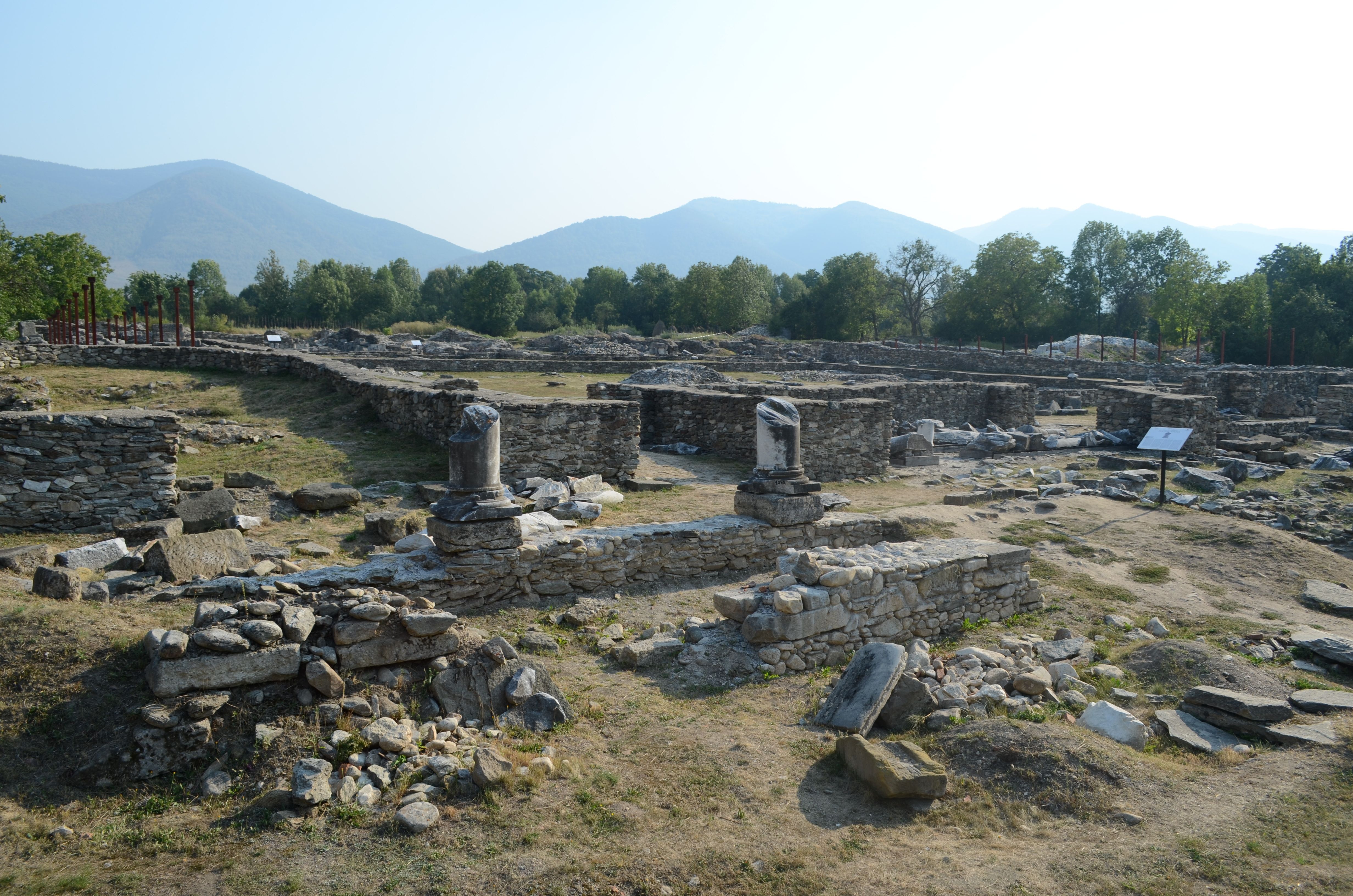
She nodded. Her translation was due on Monday too. A small publisher had commissioned her to translate an anonymous French novella from a private collection: a castle, a homecoming and several rooms described with almost exhausting care. The editor wanted to publish it alongside an essay about the way books make us look at places. Mara had chosen Suseni after reading about the fortress’s association with Verne’s novel.
Her book was not by Verne. It had cheap paper, round stains on the cover and, on the last leaf, an account for twenty buttons. Mara had grown fond of the account before the story.
From the manuscript: ‘The one who returns leaves their luggage in the lower room. The table stands beside the window, and a chair has been drawn back a little, as though someone had risen to open the door.’
She had translated the passage that morning. Two versions of ‘the one who returns’ were still on her screen. In one, the noun had Victor’s name.
When he went downstairs for his luggage, Mara closed the document. Beyond the window, the fortress walls could be made out on the wooded rock. None of the rooms in the book could be seen there.
II — The room with a window
From the manuscript: ‘The window does not open onto the courtyard. Beyond it, the ground falls away so steeply that the trees seem piled upon one another. A rectangle of light remains beneath the window, enough for one person’s work.’
Mara fell asleep with her translation of this fragment on her knees. When she entered the room in her dream, she had to stop by the door: the floor rose slightly towards the window. Small wooden wedges had been fitted beneath the table legs. She saw one, split lengthways, before she saw the view.
There was no road among the trees. The leaves beside the window had silvery undersides. She turned the chair so that Victor could look out when he raised his eyes from his work. Then she set his tools on the table, opening the pocket where he kept his bone folder.
She woke in the armchair, with the sheets of paper scattered on the carpet. Victor was asleep in the room across the landing. Before coming, he had asked for a room of his own; she had explained it to the landlady as a need for quiet while working.
In the morning she told him about the table supported on wedges.
‘Do you remember the table in my first rented place?’ he asked. ‘I used to put cardboard under one leg. You always told me it would ruin my back.’
Mara searched the French text for her dream. No wooden wedge. No sloping floor. She tried to remember whether she had ever seen that table or had only heard it described. She was not sure.
On a separate sheet she began a letter.
‘Victor, last night I found somewhere for your workshop. You could see the woods from the table.’
She crossed out ‘I found’ and wrote ‘I dreamed of’. Further down, on the half of the sheet still empty, she drew the window. There was no room left for the chair.
III — The room without drawers
The next day Victor unpicked the old stitching. The gatherings lay in a row on the table between them, each open at its centre. Mara wanted to run her fingers through the hair at the back of his neck, as she used to when reading over his shoulder. Instead, she got up to put the kettle on.
‘Don’t change the order,’ he told her. ‘Two of the signatures are incomplete.’
She wrote small numbers on slips of paper and placed them beneath the corners. Victor thanked her. It was the first task he had given her since arriving.
From the manuscript: ‘In the upper chamber there is neither cupboard nor chest. Everything the guest brings can be placed on the narrow shelf. Nothing obstructs the view of the walls.’
Mara rendered ‘the guest’ as ‘the one who stayed’. She did not like the sound of it, but left the words until the next day. In the letter she had no intention of sending, she added: ‘Here we would no longer have to trip over things.’
The dream began on a staircase she was climbing with a box in her arms. The upper room was white, with a shelf so narrow that Victor’s tools would barely fit on it. Mara set down the box. Inside were his sketchbooks, the ones with cardboard covers, which she had once moved out of the bookcase because there was no room for her dictionaries.
She tried to push the box under the bed. There was no bed. She wanted to leave it by the door, but the door opened towards it. She stood in the middle of the room with its weight in her arms while the light moved slowly from one wall to another.
At breakfast Victor took a sketchbook from his bag. He had drawn the roof of the house opposite, with a crooked sheet of metal below the chimney. Mara asked where he kept it in the workshop.
‘On the shelf. With the others.’
She left her tea unfinished. When she went back to the translation, she put ‘the guest’ back.
IV — The room made ready
On Saturday afternoon they cleared the table to let the adhesive dry. They walked to the edge of the village and stopped where the fortress could be seen above the trees. Victor raised his sketchbook, then closed it: the light was slipping down the hillside too quickly for the drawing he wanted to make.
‘Perhaps tomorrow morning,’ he said.
Mara mostly heard ‘tomorrow’. She had begun counting how many things could fit into one morning: the drawing, breakfast, the last pages, a conversation that would change their tickets.
Back at the house, she translated the third interior.
From the manuscript: ‘The room at the end was made ready long before the arrival. A plate stands on the table. Above it, on the back of the chair, lies the garment that suits the person expected.’
She lingered over ‘suits’. The French construction could refer to size or to what was fitting. Mara chose size. She still knew the length of Victor’s arms, the way he pulled his sleeves over his wrists when working on old books.
In the dream, the room had a round table and a blue plate. On the chair lay the shirt she had bought him a year before they separated. It had been a little tight across his shoulders. He had worn it once, to a dinner, and Mara had thought he was doing it to please her.
Now she was trying to smooth the sleeves, but the chair was too close to the table. When she pulled it back, its legs caught in the floor joints. She tried to move the plate: beneath it was a paler circle, and Mara could not bear to see it empty. She woke while putting everything back for the fourth time.
On the landing, Victor was on the telephone, talking about a job for Monday. She listened until she heard him finish the call. She came out with the folded letter in her palm.
‘I’ve made room for you here,’ she said.
Victor looked towards the bedroom door, where the book still lay between the boards.
‘For the book or for me?’
Mara did not unfold the sheet.
V — The untranslated line
They ate that evening in the kitchen. Victor took some bread, then pushed the basket towards her. The oilcloth was printed with plums so large that the edge of a plate cut one in half.
‘You could have told me you wanted to talk,’ he said.
‘Would you have come?’
‘I don’t know.’
Mara wanted to remind him of other times when he had not known and had come anyway. She broke off a piece of bread before replying.
‘I thought that if we had something to do together, it would be easier.’
Victor nodded.
‘Something to do, yes. But you’ve already finished it in your head. You’ve told me where I’ll work, how much light I’ll have, what we’re doing tomorrow. I came with thread and cloth for the spine.’
In her room, Mara laid the letters beside the gathering still waiting to be stitched. The first sheet showed the window without a chair. On another she had written that they would no longer need so many books if they lived somewhere close to the woods. Victor had never said he wanted to give up his books.
From the manuscript: ‘The room had not been named. Whoever reached it had to say for whom it was being kept.’
Beneath the fragment, Mara had already written ‘for us’. She crossed out the two words. She checked every noun on the page, slowly, her finger following the French line. There was no plural in the text.
She knocked on Victor’s door and handed him the gathering.
‘We don’t have to change anything about leaving tomorrow,’ she said. ‘I’m leaving the book here with you. I’m not doing any more work tonight.’
He took it in both hands so as not to bend the loose leaves.
Mara went to bed without finishing the page. In the morning she could not remember a single room.
VI — Across the sheet
Victor brought her the book after breakfast. The new cloth was almost the same colour as the old. He had kept the pieces he could not use in a pocket inside the cover. Mara examined them, then laid the account for the buttons on top.
‘Was the last leaf blank?’ he asked.
‘On this side. The account’s on the other.’
From the manuscript: ‘There was a chair in the room. Beyond the window, the woods began.’
That was all she had left to translate. No entrance, no arrival. Mara copied the two sentences onto a clean sheet and sketched the chair in one corner. Below the text she began another sentence, which she left after its first word.
Victor sat on the edge of the armchair and opened his sketchbook. He had a drawing of the roof to finish. Mara watched his hand move the pencil in short strokes without trying to see the whole shape in advance.
She told him she did not know whether she would send the letters to the editor. They were not part of the translation. Perhaps she would keep them in an envelope, perhaps not.
‘May I read one?’ he asked.
Mara gave him the first, with the window. Victor read it to the end and laid it between them without folding it. Outside, someone was unloading crates from a car. The sound of washing-up came from the kitchen.
She handed him the sheet with the last sentences.
‘This is where I stopped.’
Victor picked up the pencil beside the sketchbook. He turned the sheet sideways and drew a second chair beside the first.